Common Cannabis Growing Terms can feel overwhelming at first. Have you ever started growing and felt lost in a maze of jargon? You’re not alone. Terms like LST, pH, and Trichomes can make growing seem complicated and intimidating.
Understanding these words isn’t just about sounding like an expert. It helps you avoid mistakes, care for your plants better, and grow healthier, more productive crops. This glossary will guide you through the essential terms, explain why they matter, and show how everything connects, giving you the confidence to grow successfully every step of the way.
Starting Your Cannabis Journey: Key Common Cannabis Growing Terms
When you’re just starting out, it really helps to get comfortable with a few basic terms. These simple words and ideas act like building blocks, giving you a clear foundation to understand everything else that comes later.
1. Germination: Essential Common Cannabis Growing Terms for Seedlings
Every cannabis grow begins with this moment. Germination is the stage where a seed wakes up and starts to push out its first tiny root, called the radicle. Soon after, you’ll see the small round cotyledon leaves unfold, signaling that the plant has officially begun its journey. It might look simple, but this stage is incredibly important because a strong start often sets the tone for healthy growth later on.
A few of the most common ways growers germinate seeds include placing them between moist paper towels until the root peeks out, soaking them in a glass of water until they crack open, or planting them directly into soil or another growing medium. Each method works, and many growers develop their own favorite approach with time and experience.
2. Vegetative Stage: Important Common Cannabis Growing Terms for Growth
After your seedling has taken root and shown its first true leaves, it transitions into the vegetative stage. This is the period when the plant shifts its energy toward building strength and structure. Instead of worrying about buds, the plant focuses on stretching upward, thickening its stem, and filling out with lush, green leaves. You’ll also see new branches forming, which later provide more sites for flowers to develop. In many ways, this stage is like a training ground, laying the foundation for everything that comes during flowering.
To thrive, cannabis needs the right conditions in this phase. Photoperiod plants usually do best with about 18 hours of light and 6 hours of darkness each day, while autoflowers can often manage on even longer light cycles. Nutrient needs also shift here, with nitrogen playing a key role in supporting leafy growth. A steady balance of water, airflow, and space helps your plant grow big, bushy, and ready for the exciting next stage.
3. Flowering Stage: Must-Know Common Cannabis Growing Terms for Buds
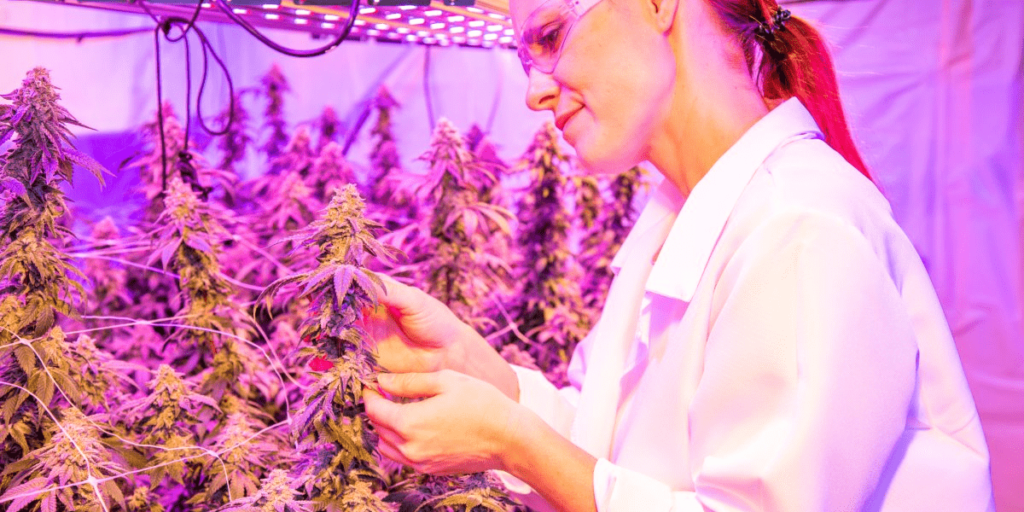
The flowering stage is the moment most growers look forward to. After weeks of building up leaves and branches, the plant finally shifts its energy toward creating buds, the flowers filled with cannabinoids and aromatic compounds. This phase marks the plant’s reproductive period, and you will notice changes almost immediately. Small pre-flowers appear at the nodes and gradually develop into clusters that swell into dense, sticky colas covered in resin. Watching this transformation is both exciting and rewarding, as it is the stage that produces the harvest every grower works toward.
How the flowering stage begins depends on the type of cannabis. Photoperiod strains respond to changes in their light schedule, usually requiring twelve hours of light followed by twelve hours of complete darkness. Autoflowering strains, on the other hand, do not rely on light cycles but instead begin flowering automatically once they reach a certain age. At this point the plant’s nutritional needs also change. It will thrive with lower nitrogen and higher levels of phosphorus and potassium, along with stable temperature, humidity, and airflow to support strong bud development.
4. Trichomes: Key Common Cannabis Growing Terms for Harvest
Trichomes are the tiny, crystal-like glands that cover the buds and the small sugar leaves of your cannabis plant. Up close, they often look like miniature mushrooms with a stalk and a rounded head. These delicate structures are far more than just decoration. They are the plant’s factories for producing cannabinoids such as THC and CBD, as well as the terpenes that give each strain its unique aroma and flavor. Because of this, trichomes are considered the most valuable part of the plant and play a central role in the quality of your harvest.
Growers pay close attention to trichomes when deciding the right time to harvest. Their appearance changes as the plant matures. In the early stages they are clear, then they turn cloudy or milky, and eventually shift toward amber. Each stage tells a different story about the potency and effects of the final product. Clear trichomes usually signal that it is too early, cloudy trichomes often mean peak THC levels and an energetic effect, while amber trichomes lean toward a more relaxing or sedative experience. Learning how to observe these tiny details with the help of a magnifying glass or a jeweler’s loupe is one of the most reliable ways to ensure your harvest matches the effect you are aiming for.
5. pH Levels: Core Common Cannabis Growing Terms for Nutrient Management
pH is a measure of how acidic or alkaline your water and nutrient solution are, and it plays a surprisingly important role in the health of your plants. Cannabis roots can only take in nutrients effectively when the pH stays within a certain range. If the level drifts too high or too low, the nutrients may still be present in the soil or solution, but the plant will not be able to use them. This problem, known as nutrient lockout, often shows up as yellowing leaves, slow growth, or deficiencies that can be frustrating to diagnose if you are not checking pH regularly.
Different growing methods call for slightly different ranges. For traditional soil grows, a pH between 6.0 and 7.0 usually provides the best balance. Hydroponic systems and coco coir setups need a slightly more acidic environment, generally between 5.5 and 6.5, to keep nutrients available. Because these levels can shift quickly, it is a good habit to test your water and nutrient mix often with a pH meter or test drops. When necessary, simple pH up or pH down solutions can bring the balance back into the proper range, ensuring your plants get exactly what they need.
Common Cannabis Growing Techniques Explained: Training Terms
When you take the time to learn and apply these techniques, you give your plants a real advantage. Healthier growth, stronger resilience, and noticeably better yields are often the result. Even small improvements in how you handle each stage can add up, turning an average grow into a harvest you can be proud of.
1. LST (Low Stress Training): Common Cannabis Growing Terms for Branching
Low stress training, often called LST, is a method growers use to gently guide the shape of their plants. Instead of letting the main stem shoot straight upward, you carefully bend and secure branches outward with soft ties or garden wire. The goal is to open up the plant’s canopy so that light can reach more of the bud sites hidden lower down. When done with patience, this technique encourages the plant to grow in a more balanced way, producing multiple strong colas instead of a single tall one.
One of the biggest advantages of LST is that it achieves these results without putting the plant under heavy stress. Unlike topping or pruning, which involve cutting and can slow growth temporarily, LST relies on subtle adjustments that allow the plant to keep growing smoothly. Over time you will notice the difference in both structure and yield, with bushier plants, healthier airflow through the canopy, and buds that develop more evenly. Many growers enjoy this hands-on process because it feels like working in partnership with the plant rather than forcing it into shape.
2. SCROG (Screen of Green): Important Common Cannabis Growing Terms for Canopy
SCROG, short for Screen of Green, is a technique many growers use when they want to maximize yields and make the most of their grow space. It involves placing a horizontal screen or netting above the plants and gently weaving branches through it as they grow. The goal is to spread the plant out evenly so that every bud site sits directly under the light. Over time, this creates a flat, uniform canopy where all the colas receive similar light exposure, making your grow area look like a literal screen of green.
One of the advantages of SCROG is that it helps manage plant height while encouraging more bud sites to develop. It works well for both indoor and greenhouse grows where light penetration can be limited. The technique requires some patience and attention, as you need to tuck and guide new growth regularly, but the payoff is a canopy that is more productive and easier to maintain. Many growers find SCROG rewarding because it combines creativity with precision, turning the plant into a well-organized, highly efficient system for producing quality buds.
3. Topping: Common Cannabis Growing Terms for Pruning and Yield
Topping is a common technique used by growers to encourage bushier and more productive plants. It involves carefully cutting off the main growing tip of the plant. By removing this dominant top, the plant redirects its energy into developing two new main colas where there was previously only one. Over time, this results in a plant with multiple strong stems and a more even canopy.
Because topping is considered a high-stress method, it can temporarily slow growth while the plant recovers. However, when done at the right time, usually after the plant has developed several sets of true leaves, the benefits become clear. Topped plants often produce more bud sites, stronger branches, and a fuller, more robust structure. Many growers appreciate topping because it allows them to shape the plant while significantly increasing its potential yield.
4. Flushing: Essential Common Cannabis Growing Terms Before Harvest
Flushing is a technique growers use in the final weeks before harvest to improve the quality of their buds. It involves giving the plants plenty of plain water that is properly pH-balanced, without any added nutrients. The goal is to wash out excess nutrient salts that have built up in the plant over the growing period.
By doing this, the plant has a chance to finish using stored nutrients and the buds become cleaner and smoother. Many growers notice that properly flushed cannabis produces smoke or vapor that is less harsh and more flavorful. Flushing can take a week or two, depending on the plant and growing conditions, and it is considered an important step for anyone looking to maximize the taste and overall quality of their harvest.
Cannabis Lighting and Environment Terms Every Grower Should Know
Getting familiar with these terms is an important step for any grower. Knowing what they mean and how to apply them can help you make smarter decisions, create a healthier environment for your plants, and get the most out of your grow space. The more comfortable you are with these concepts, the easier it becomes to troubleshoot problems and encourage strong, consistent growth.
1. PPFD: Common Cannabis Growing Terms for Proper Light Intensity
PPFD, which stands for Photosynthetic Photon Flux Density, is a measure of how much light your plants are actually able to use for photosynthesis. More specifically, it tells you the amount of photosynthetically active radiation, or PAR, that lands on a given surface every second. In simpler terms, it shows how much usable light reaches your plants.
Understanding PPFD is important because it directly affects how well your plants grow. If the number is too low, the plants may stretch or grow slowly. If it is too high, it can cause light stress, but within the right range, higher PPFD usually encourages stronger, more vigorous growth. For growers, paying attention to PPFD helps ensure that every leaf gets enough light to thrive and that the plant can reach its full potential in both size and yield.
2. Humidity & VPD: Key Common Cannabis Growing Terms for Climate Control
Humidity is simply the amount of moisture present in the air around your plants. While it is easy to understand, keeping it at the right level is essential because too much or too little can affect growth and overall plant health. VPD, or Vapor Pressure Deficit, is a more precise way to look at the plant’s environment. It measures the difference between the moisture actually in the air and the maximum amount of moisture the air can hold when fully saturated.
Understanding VPD gives growers a clearer picture of how well their plants can transpire, which is the process of moving water and nutrients from the roots to the leaves. Maintaining the proper balance of humidity and VPD helps ensure healthy growth, efficient nutrient uptake, and stronger, more resilient plants. Experienced growers often use this metric to fine-tune both temperature and humidity, creating conditions that let their plants perform at their best.
Common Pests and Problems: Must-Know Common Cannabis Growing Terms
Understanding these terms can make a big difference in keeping your plants healthy. Being able to identify problems early helps you take action before they seriously affect your grow.
- Spider Mites: tiny arachnids that feed on the cells of your leaves. They are often hard to see with the naked eye, but you may notice small white or yellow specks on the foliage. If left unchecked, spider mites can quickly spread and weaken the plant.
- Powdery Mildew: fungal disease that shows up as white, powdery spots on leaves. It can interfere with photosynthesis, slowing growth and reducing overall plant health. Humidity management and proper airflow are key to preventing this common issue.
- Nutrient Lockout: when essential nutrients are present in the soil or solution but the plant cannot absorb them, often due to pH being outside the ideal range. This can lead to deficiencies even when your nutrient schedule seems correct.
- Nutrient Burn: when the plant receives too many nutrients at once. It usually shows as browning or “burnt” tips on the leaves. Adjusting feeding schedules and monitoring nutrient concentrations can prevent this problem.
Knowing these issues and how they manifest is the first step toward solving them. For a deeper dive into managing pests and other cultivation challenges, exploring a detailed guide on cannabis pest solutions can give you practical strategies and peace of mind throughout your grow.
Nutrient Basics and Feeding: Essential Common Cannabis Growing Terms
Properly feeding your plants is one of the most important steps for achieving strong growth and a satisfying harvest. Understanding the key nutrient terms helps you give your plants exactly what they need at each stage.
- N-P-K refers to the three primary macronutrients in cannabis cultivation: Nitrogen, Phosphorus, and Potassium. Each plays a different role throughout the plant’s life cycle. Nitrogen is crucial during the vegetative stage because it supports healthy leaves and stems, giving the plant the energy to grow strong. Phosphorus becomes more important during flowering, helping with bud development, root growth, and energy transfer within the plant. Potassium supports overall health, strengthens stems, improves flower quality, and helps the plant resist disease.
- Micronutrients are needed in smaller amounts but are just as essential. Elements like Calcium, Magnesium, Iron, and Zinc contribute to healthy growth and prevent subtle deficiencies that can affect yield. Many growers use Cal-Mag supplements, especially in hydroponic or coco coir systems, to prevent calcium or magnesium shortages.
The nutrient solution is the water mixed with all these soluble nutrients and is what the plants absorb through their roots. Problems arise when the balance is off. A deficiency occurs when a plant does not get enough of a specific nutrient, often showing up as discolored or deformed leaves. Toxicity happens when a nutrient is over-applied, which can burn roots or leaves and stunt growth. Paying close attention to these signs and adjusting your feeding accordingly is key to maintaining healthy, productive plants.
Other Core Concepts: Key Common Cannabis Growing Terms
These terms cover important aspects of plant characteristics, growth methods, and post-harvest care. Understanding them helps you make better decisions throughout your grow.
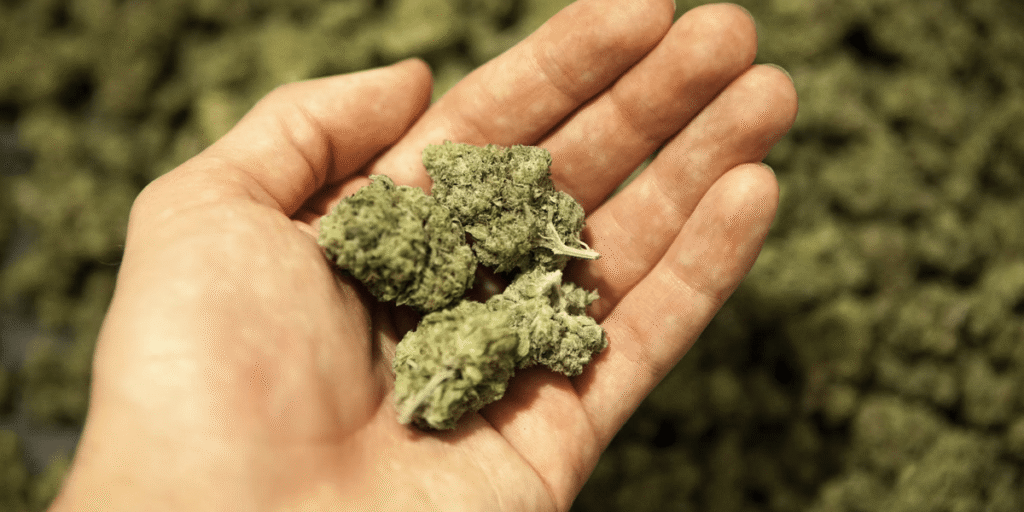
- Curing: The crucial post-harvest process of slowly drying and then storing dried buds in airtight containers to enhance flavor, aroma, and potency while reducing harshness.
- Terpenes: Aromatic compounds found in cannabis that give strains their unique smells and flavors, also contributing to their effects.
- Cannabinoids: The chemical compounds unique to cannabis that interact with the body’s endocannabinoid system. Key examples include THC (Tetrahydrocannabinol), known for its psychoactive effects, and CBD (Cannabidiol), praised for its non-intoxicating therapeutic properties.
- Phenotype / Genotype:
- Genotype: The genetic makeup of a cannabis plant.
- Phenotype: The observable characteristics of a plant, influenced by both its genotype and environmental factors.
- FIMming: A high-stress training technique similar to topping, where you pinch off about 75% of the main growing tip, often resulting in 3-4 new colas instead of two.
- Main-lining: A method of aggressively pruning and training a cannabis plant to create multiple main colas (often 8 or 16) all of equal size, maximizing yield.
- Resin: The sticky, gooey substance produced by trichomes, rich in cannabinoids and terpenes.
- Hydroponics: A method of growing plants without soil, using mineral nutrient solutions dissolved in water.
- Soil: The traditional growing medium, providing a rich microbial environment.
- Coco: A popular soilless growing medium made from coconut husks, offering excellent aeration and water retention.
- Autoflower: Cannabis strains that flower based on their age, rather than changes in light cycles.
- Photoperiod: Cannabis strains that rely on changes in light cycles to transition from vegetative growth to flowering.
- Stigma / Pistil:
- Pistil: The female reproductive organ of a flower.
- Stigma: The sticky, hair-like structures on the pistil (often white, turning orange/red) that collect pollen and are visual indicators of bud maturity.
Cannabis Growing Terms: FAQs from New Growers Answered
Q1. How long do cannabis clones take to root?
Most healthy clones usually start developing roots within one to two weeks if conditions are right. Some stubborn ones might take up to three weeks. The key is to keep humidity high and give them a bit of patience. Avoid disturbing them too much while they’re forming roots.
Q2. Can I clone a flowering cannabis plant?
You can, but it’s trickier. A clone from a flowering plant needs to revert back to the vegetative stage first, which slows down root growth. For the easiest success, it’s better to take cuttings from plants that are still in the vegetative phase.
Q3. What’s the best temperature and humidity for cloning?
Aim for a warm and humid environment. Temperatures around 72 to 79 degrees Fahrenheit and humidity between 75 and 90 percent work well. Using a humidity dome or cover for the first week can really improve your success rate.
Q4. Why are my cannabis leaves turning yellow?
Yellowing leaves often point to a nutrient issue, incorrect pH, or overwatering. Check your feeding schedule, make sure your pH is in the right range, and inspect the roots for any problems. Catching issues early helps prevent them from spreading.
Q5. How do I prevent pests in my grow room?
Prevention is always easier than treatment. Keep your grow area clean, inspect your plants regularly, and consider early interventions like neem oil or introducing beneficial insects. Integrated pest management, or IPM, combines several strategies to keep your plants healthy.
Final Thoughts on Key Common Cannabis Growing Terms
Learning these terms is about more than memorizing definitions. It gives you the foundation to really understand your plants and how they grow. When you know what each term means, you can spot issues early, make smarter adjustments, and create the right conditions for strong, healthy growth. The more familiar you are with these concepts, the easier it becomes to troubleshoot problems and encourage bigger, more productive yields.
Think of it as building your grower’s intuition. Every observation, from leaf color to branch structure, makes more sense when you understand the language of cultivation. Keep exploring these ideas, experiment carefully, and you’ll find that your confidence and success in growing will grow along with your plants.
For a complete view of the entire cultivation journey, from seed to harvest, check out our detailed cannabis grow timeline. Every stage has its own tips and tricks, and staying curious is the best way to keep improving.
Ready to Master Your Grow? Explore More Common Cannabis Growing Terms
Feeling more confident with your cannabis vocabulary? That’s great! Understanding these terms is the first step toward becoming a more skilled and confident grower. Once you know what all the words mean, caring for your plants becomes much easier and far more enjoyable. You’ll notice yourself spotting issues faster, making smarter adjustments, and seeing better results from your efforts.
Why wait to give your plants the care they deserve? Whether you’re experimenting with a small hydroponic system at home, running a vertical tower, or managing a modern greenhouse, the right grow lights and tools can make a huge difference. With proper lighting, your plants can grow stronger, healthier, and more productive no matter the season.
Check out our range of energy-efficient LED grow lights and smart hydroponic solutions at www.greenfuturelight.com. We have something for everyone, from beginners taking their first steps to experienced growers aiming for maximum yields.
Not sure which setup is best for your space or your plants? Our horticultural lighting specialists are ready to guide you through every step. We want to make growing easier, more effective, and a lot more enjoyable.
We also love seeing your progress! Share your grow journey on Instagram @Greenfuturelight and connect with other growers who are exploring indoor farming. Let’s learn, experiment, and grow together!
Related Articles on Common Cannabis Growing Terms
- How to Plan Your First Cannabis Harvest?
- How Grow Lights Are Revolutionizing Greenhouse Agriculture
- Unlocking Cannabis Potency and Yield with UV and IR Light
- Innovative Farming: Grow Lights and Vertical Farming Systems
- The Role of LED Grow Lights in Sustainable Farming
- Red Light vs. Blue Light: Which One’s Best for Your Cannabis?